
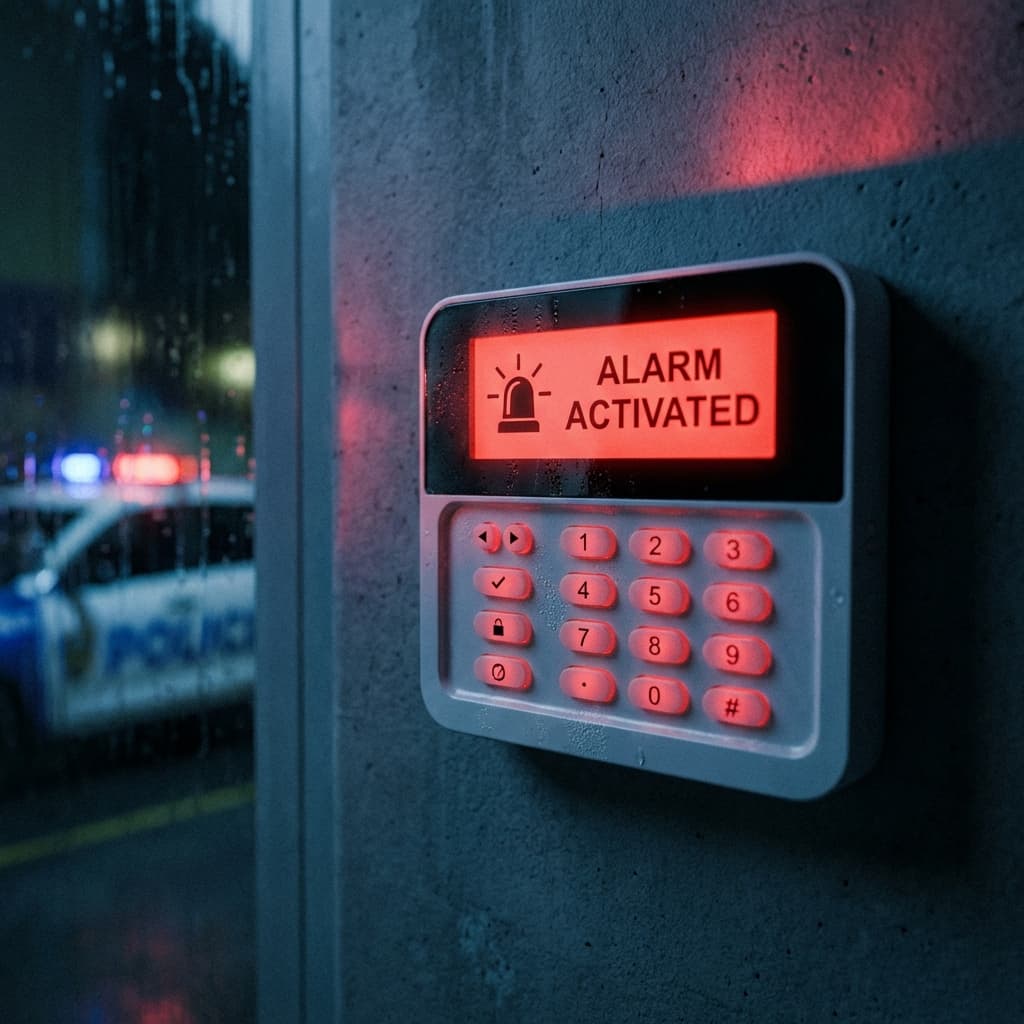
The Pain: It’s 3:00 AM. You are fast asleep, and suddenly, your siren starts screaming. Your heart races, you grab your panic button, and check your cameras... nothing. No intruder. Just silence and a very loud siren.
The Agitation: False alarms are more than just a nuisance that angers your neighbors. They are dangerous. If your system cries "wolf" too often, you—and your armed response company—might stop treating the activations seriously. That hesitation could cost you dearly when a real threat arrives.
In this article, we draw on our years of experience servicing the Western Cape to explain exactly why this happens.
Generally, false alarms in Cape Town are caused by aging backup batteries (worsened by frequent power cuts), dirty or insect-infested sensors, strong drafts from open windows, or corroded wiring due to coastal air. Below, we break down how to troubleshoot and solve these issues.
1. The "Load Shedding" Hangover: Low Batteries
In our experience servicing homes across Durbanville and the Northern Suburbs, the number one cause of false alarms is the backup battery.
When the power cuts, your system relies entirely on the battery. If that battery is old or struggling to hold a charge, the voltage drops. This voltage fluctuation sends "confused" signals to the alarm panel, often triggering a siren activation.
Pro Tip: If your keypad shows a "Trouble" light or a "Low Battery" indicator, don't ignore it. A standard lead-acid battery usually lasts 2–3 years, but with constant Stage 4 or 6 load shedding, we often see them fail in under 18 months.
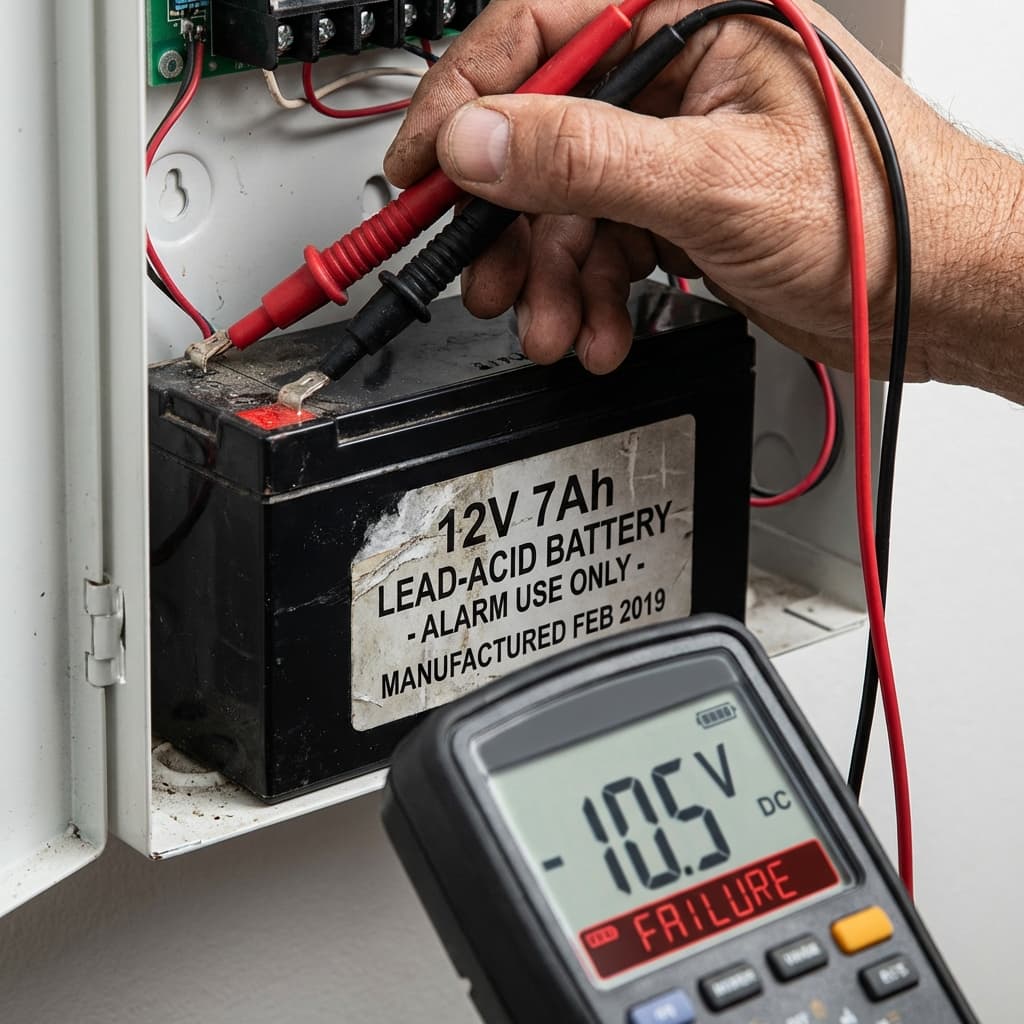
Technician testing a faulty 12V 7Ah alarm backup battery with a multimeter showing low voltage caused by frequent Cape Town load shedding, requiring immediate replacement.
If you are struggling with power issues, check out our Load Shedding Security Solutions page for battery backups and solar options.
2. The "Cape Doctor" & Open Windows
Cape Town is famous for its wind. If you live in windy areas like Blouberg or Milnerton, a simple draft can trigger a false alarm.
Passive Infrared (PIR) sensors detect rapid changes in heat energy. A sudden gust of wind through an open window can move curtains or plants, creating a "movement" signature that the sensor interprets as a person. Even a sudden change in temperature from a hot draft can trip older, less sensitive units.
The Fix: Ensure all windows are shut before arming your alarm.
The Upgrade: If you need to leave windows open for ventilation, consider installing "Pet Friendly" or Dual-Tech sensors which are more forgiving of environmental noise.
3. Creepy Crawlies: Spiders and Geckos
We often find that sensors installed in corners become warm, cozy homes for spiders and geckos, especially in Somerset West and leafier suburbs.
If a gecko crawls directly across the lens of your PIR sensor, it looks like a massive object to the detector. This is a classic cause of the "3 AM mystery alarm."
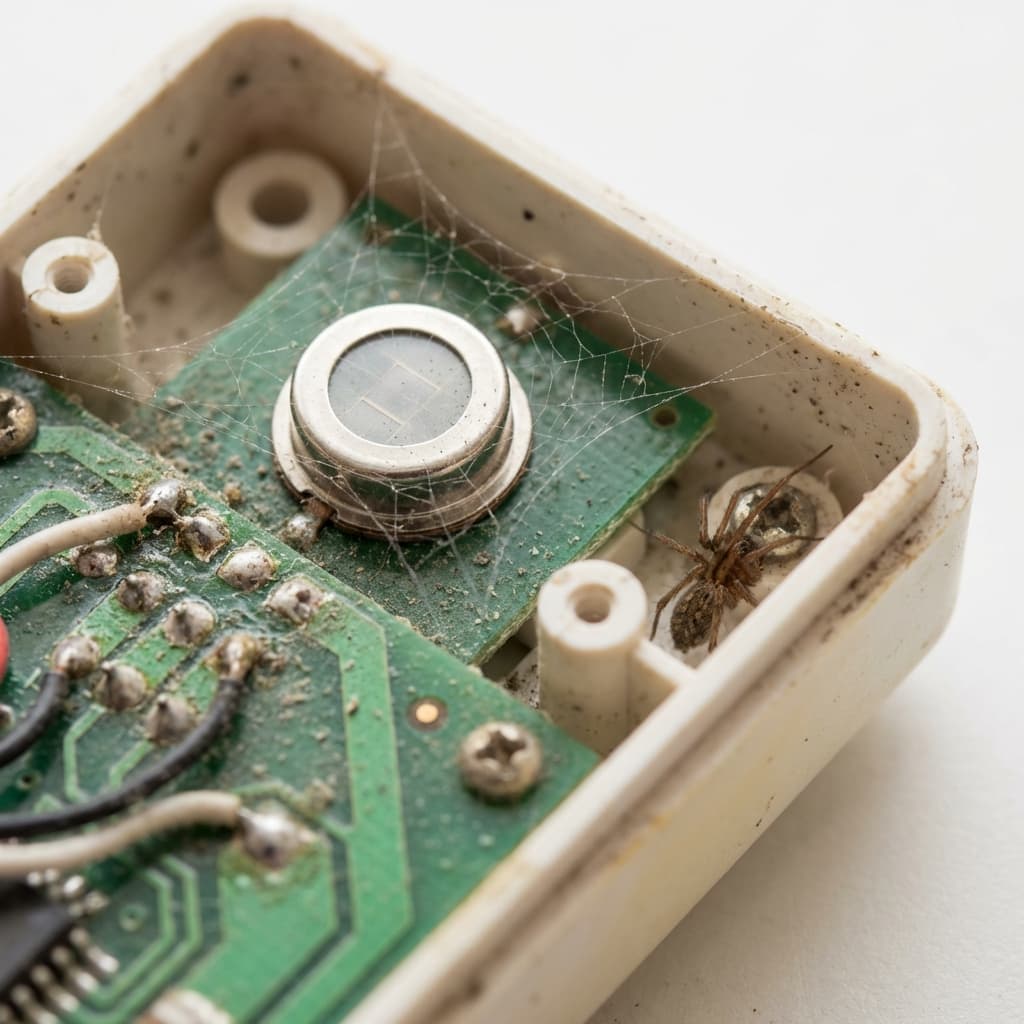
Internal view of a dirty PIR motion sensor circuit board covered in spider webs and dust, which is a common cause of false alarms in residential security systems.
Maintenance Tip: gently vacuum around your sensors once a month to keep webs away. If the problem persists, we can seal the cable entry points with silicone to prevent insects from entering the unit.
4. Aging Equipment and Corrosion
Living near the coast in areas like Camps Bay or Clifton presents a unique challenge: sea air. The salt content in the air corrodes copper wiring and sensor contacts over time.
Corroded wires increase resistance, leading to intermittent signal drops that the alarm panel interprets as a "tamper" or an "open zone."
If your system is more than 7–10 years old, the plastic lenses on the sensors may also have degraded, making them hypersensitive to sunlight and car headlights.
Solution: Visit our Repairs & Upgrades page. Sometimes, replacing the old cabling or swapping out 10-year-old sensors for modern digital ones is the only permanent fix.
5. Loose Cabling or Faulty Contacts
Have you recently had renovations done? Or perhaps a door slammed shut a little too hard?
Magnetic contacts (the small white blocks on your doors and windows) can shift over time. If the magnet moves just a few millimeters too far from the reed switch, the system might think the door is "floating" open. On a windy night, the door rattling in the frame is enough to break that weak magnetic connection and trigger the alarm.
Safety Note: Never just "Bypass" a faulty zone and forget about it. That leaves a hole in your security perimeter that criminals will eventually find.
Conclusion & Pitch
To summarize, if your alarm is going off without an intruder, it is likely a cry for help from your hardware. Whether it's a battery killed by load shedding, a spider in the sensor, or corrosion from the Cape Town air, these issues don't fix themselves.
At Global Security Solutions, we have successfully diagnosed and fixed thousands of Alarm Systems across the Western Cape. We don't just put a plaster on the problem; we ensure your system is stable, reliable, and ready to protect you when it actually counts.
Read more about our full range of services at globalsecuritysolutions.co.za.
Ready to upgrade your security?
Click here to message us on WhatsApp for a quote or contact us online.